


As a long-time production ops person with a flair for automation and some development, I’ve spent years wrestling with the chaos of telemetry data. Logs, metrics, traces-they’re the lifeblood of understanding distributed systems, but they’re often a firehose of noise drowning out the signals that matter.
That’s why, in the halls of KubeCon + CloudNativeCon North America 2025 in Atlanta last month, I loved seeing the amount of people in the ControlTheory booth. Their approach to practical AI-powered observability, especially through tools like Gonzo and Dstl8, struck a chord. It wasn’t just another dashboard play, instead it was about extracting real intelligence from logs, including something I’ve long seen as an untapped goldmine: sentiment analysis.
In my experience, logs aren’t just error codes and timestamps-they’re narratives written in the language of systems and humans alike. Developers embed frustration, warnings, and subtle shifts in tone that hint at brewing issues. Traditional tools ignore this layer, treating logs as raw data to index and query.
But ControlTheory saw the opportunity to introduce the concept of distilling sentiment at the edge, turning vague “something’s off” vibes into actionable insights. It’s been a huge boost for me, allowing me to squeeze more value from existing logs without blowing up storage or tool budgets.
Here’s why this matters and how Gonzo and Dstl8 are upleveling the developer experience in ways that feel genuinely innovative.
The Overlooked Opportunity in Log Sentiment
Observability has evolved, but we’re still stuck in a collection-first mindset: ingest everything, store it in a lake, and hope queries surface the truth. The problem? Logs are human-readable by design, packed with sentiment-tone, intent, frustration-that metrics alone can’t capture.
Think about it: a log entry saying “connection retrying…again” carries a powerful hint of sentiment that signals a cascading failure, while “smooth handover complete” implies stability. Yet most platforms strip this away, focusing on volume over vibe.
Lots of folks are diving into tracing and finding out that there is much more work to get that level of intelligence inside the application code. Meanwhile, we are shipping logs out of literally every single application and infrastructure object we have…and not doing enough with them.
Enhancing and Very Human Process
In my ops days, I’ve spend countless hours manually sift through logs during incidents, looking for some signals or nuances to hypothesize root cause. It was toil-heavy and inconsistent. ControlTheory’s Möbius continuous AI changes that by analyzing sentiment directly where telemetry is produced. Dstl8, their enterprise platform, reduces noisy log traffic by over 90% while preserving severity, sentiment, and key signals.
For me, this has meant rediscovering patterns in streaming logs that were invisible before-like rising “frustration” in service interactions that precede outages. It’s not magic; it’s smart distillation that treats logs as a feedback loop, not a dump.
Gonzo: Real-Time Visibility in the Terminal Flow
I first encountered Gonzo, ControlTheory’s open-source terminal UI when it launched. As someone who’s lived in the terminal for debugging everything from ETL processes to Heroku apps to Kubernetes pods, it felt tailor-made. Gonzo streams logs in real-time, OTLP-native, with interactive features like pattern grouping, severity tracking, and heatmaps. But the kicker? Built-in AI for suggesting causes, locally or with your preferred models. Not only that, but they went with a privacy-first model to allow you to use Ollama for complete control over where you analyze and store the logs.
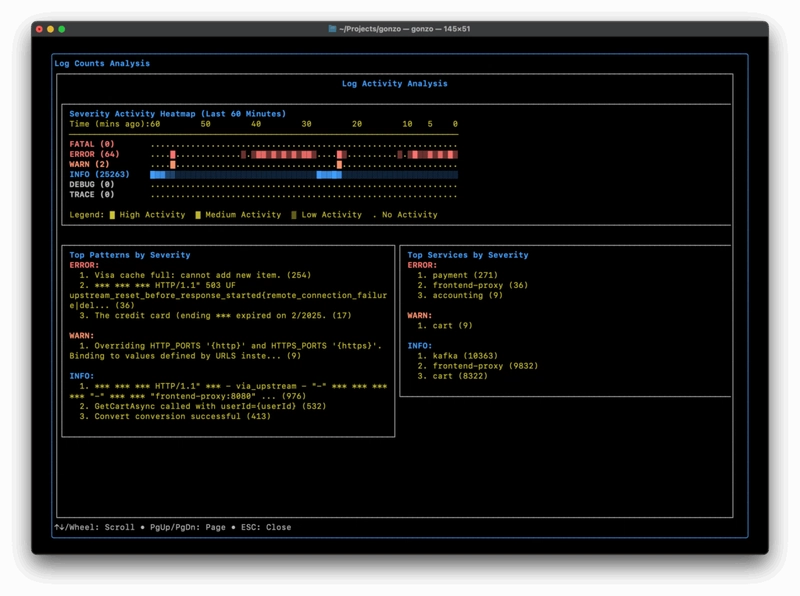
Testing it on my own setups, Gonzo surfaced sentiment-driven insights I hadn’t coded queries for. For instance, during a Ruby on Rails application update I was pushing to Heroku, it highlighted clusters of “warning” logs with negative sentiment, correlating them to a misconfigured resource limit. Without it, I’d have chased my tail (literally by tailing my logs), but instead I was shown a pattern before it actually took the application down.
Now, with over 2,300 GitHub stars in just a few months, it’s clear the community agrees: this is observability that meets developers where they work. It’s boosted my efficiency, turning ad-hoc debugging into proactive pattern spotting-no context switching required.
Dstl8: Scaling Sentiment Across Environments
Building on Gonzo’s momentum, Dstl8 takes this to team scale. Previewed at KubeCon, it’s a continuous AI platform that operates in three layers: edge distillation for summarizing telemetry on-the-fly, operational inference for correlating patterns across clusters, and an agentic layer for always-on investigations.
The result? Plain-English explanations of what changed, why, and next steps-delivered via Slack, webhooks, or UI.
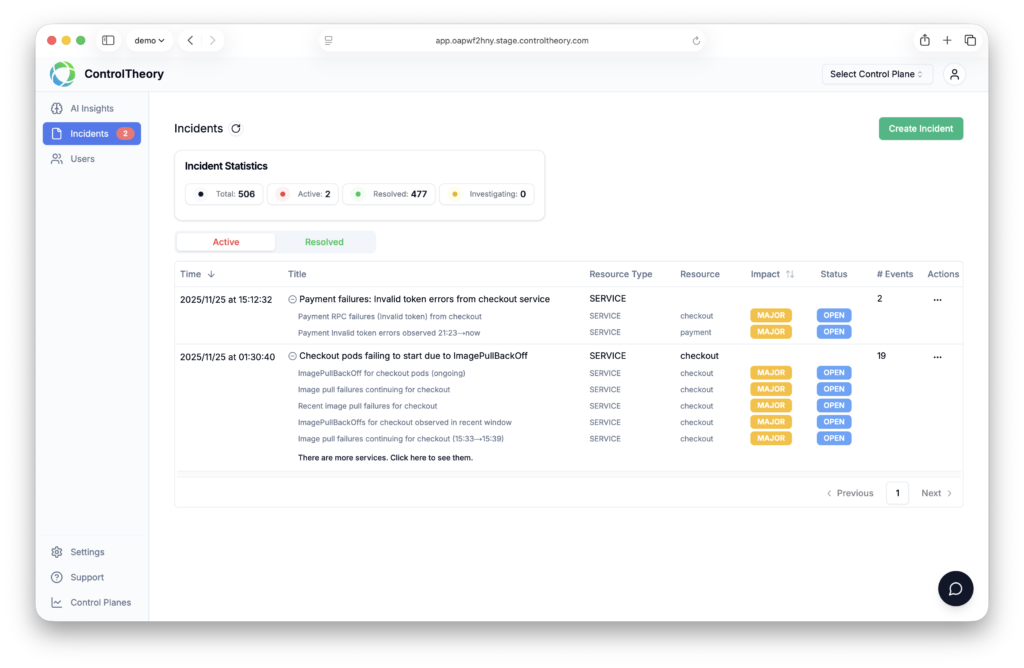
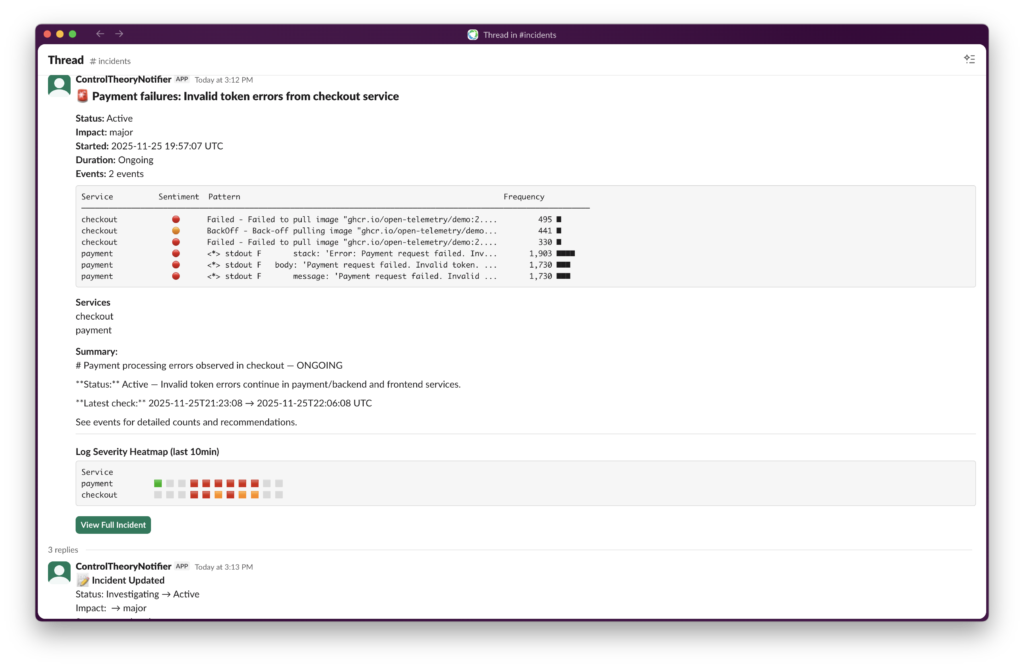
For lean ops teams like those I advise, this is a boon. In one POC I ran, Dstl8 distilled logs from a multi-cluster Kubernetes setup, flagging sentiment shifts in customer-facing services before errors spiked. It cut triage time dramatically, from hours of query-hunting to minutes of guided insights.
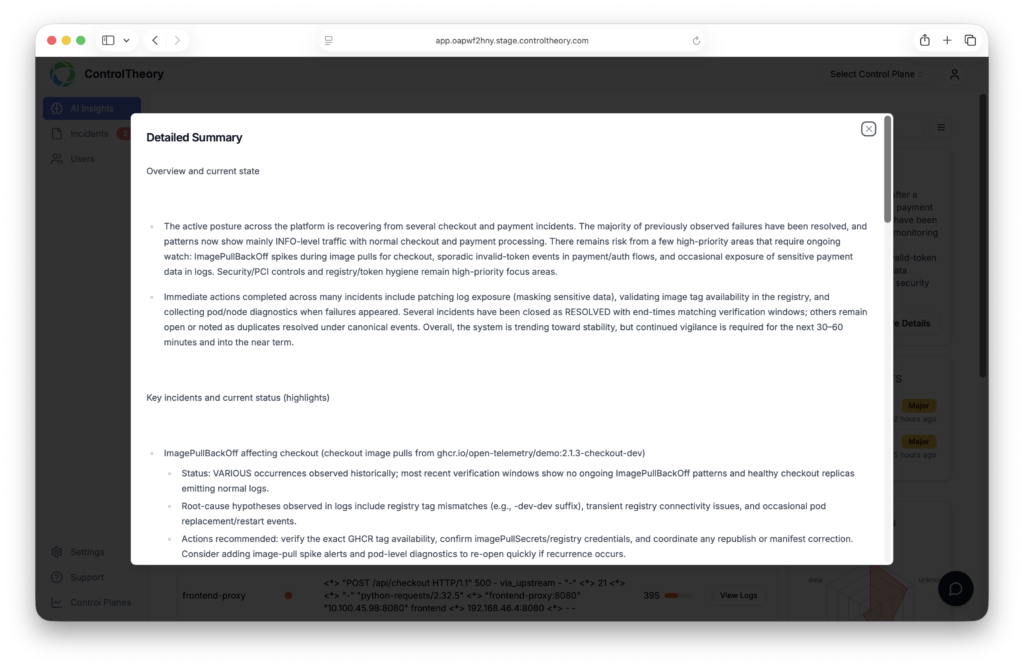
And the cost savings? By filtering at the edge, it slashes ingested volume without losing context-integrating seamlessly with CloudWatch, Datadog, or Loki. It’s empowered me to uplevel dev experiences, making observability feel like an ally rather than an overhead.
Distillation gives you the purity of the signal, and lets you choose where you send and store your noise.
Why This Matters for SREs and Platform Teams
We already see AI workloads exploding telemetry volumes and we can’t risk blind spots. ControlTheory focuses on controllability, distilling signal from noise, hypothesizing root causes-aligns with CNCF trends like OpenTelemetry and edge intelligence.
At KubeCon, their demos showed real-world impact: 90%+ lower costs, faster MTTR, clearer cross-team communication. It’s beautiful to see that “Aha!” moment in real-time as someone seeing Dstl8 and Gonzo in action.
From my perspective, the real win is how Gonzo and Dstl8 unlock sentiment as a first-class signal. It’s let me do more with existing logs, surface hidden patterns in streams, and reduce toil. If you’re an SRE battling alert fatigue or a dev tired of dashboard debt, give Gonzo a whirl. It’s open-source and quick to install.
For enterprise scale, Dstl8’s preview is worth exploring. Observability isn’t about collecting more, rather t’s about understanding better from what available inputs we have. ControlTheory gets that, and it’s reshaping how I, and hopefully you, approach application and infrastructure ops.
Thank you to the ControlTheory team for making themselves available for lots of great interview and discussion time. Looking forward to seeing more big things from them in 2026!