

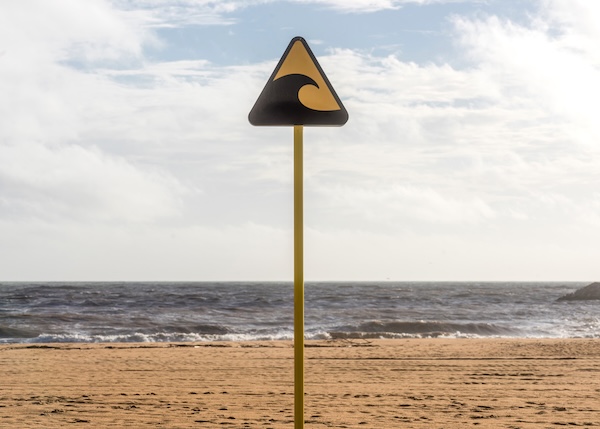
The AI world right now looks a lot like the start of a tsunami. Developers and executives are rushing to grab the low-hanging opportunities, blind to the fact that this pullback is a signal of massive inbound wave on the way. The AI risk is not unlike what we’ve seen in nature.
In areas hit by tsunamis, the first clue isn’t a giant wave smashing everything. It’s the sea retreating. The beach stretches out further than normal, revealing parts of the ocean floor that were underwater just before. People walk out there, curious and puzzled by the change, taking pictures or picking up stuff from the sand. “That’s weird, the tide seems to be really going out more than normal” missing the hard science behind it (this withdrawal shows a huge wave is gathering strength out at sea, about to charge in with unrelenting force).
Now picture that with. The tools we’re seeing today, things like ChatGPT, Claude Code, image creators, and basic automation, seem like a big deal. Businesses are making them core to their daily operations, seeing real jumps in efficiency. Reports flood social media predicting how AI might pump trillions into the global economy by 2030 from these kinds of gains. But this stage is just like that receding water. It’s the exposure of weaknesses in our systems, morals, and mitigations, drawing us in without setting off alarms.
Look at what’s happening. Job listings for AI work shot up over 70% last year, but most of those roles are about tweaking current models, not creating new foundations. Open-source projects are full of copies and small changes, with real breakthroughs slowing down. Companies talk about 20-30% faster operations, yet problems like biased data and huge power use get ignored. It’s like we’re all wandering onto that bigger beach, not hearing the far-off roar.
This pullback gives us a short breather, but it’s running out fast. What’s coming next? AI boosted by quantum technology, neuralink and physical connectivity to computing, or spread-out networks that handle data at levels way beyond what we have now. Work from big players points to quantum systems that fix errors reliably by the end of the decade, solving tough puzzles in fields like biology and materials in hours instead of years. When that wave crashes, teams that aren’t ready will get wiped out, not just in their tech stacks, but in how they do business altogether.
We’ve seen this before in tech history. The dot-com crash in the early 2000s swept away the junk, making room for mobile and cloud booms that created massive value. AI’s current dip is doing the same thing. It’s our shot to build stronger. People in the field need to check their data, learn up on new setups, and fight for rules that make sense, all before the big one lands.
To those running tech teams, this isn’t just a blackpilled opinion. It’s basic science. The water drawing back is the signal to get to safety. Brush it off, and you’ll be scrambling when the flood comes.
This is our moment to prepare for the real impact.